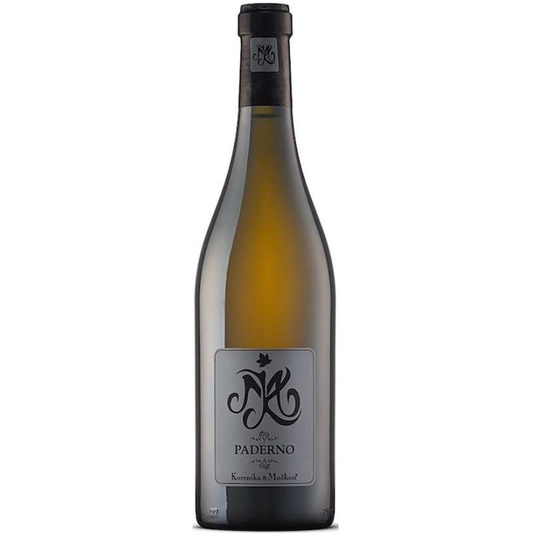
The Great Closure Divide: Cork vs Screw Cap
Deli
There’s a moment before every glass of wine — that little ritual of opening. For some, it’s the sigh of a cork leaving the bottle: soft, romantic, the prelude to something civilized. For others, it’s the sharp twist of a screw cap: quick, efficient, no ceremony required. Two sounds, two worlds, and a century of snobbery between them.
Let’s begin with the old way — cork. The stuff comes from the bark of the Quercus suber, the cork oak, grown mostly in Portugal and parts of Spain. The bark is harvested by hand every nine years — stripped, dried, boiled, cut — a patient, sustainable process that’s been around since the ancient Greeks were floating amphorae across the Mediterranean. Cork seals are remarkable things: they expand inside the bottle’s neck, keeping air out while allowing the faintest breath of oxygen to pass through. That microscopic exchange helps certain wines mature, evolve, and gather complexity.
Portugal is the undisputed heavyweight of the cork industry, particularly the Alentejo region, where vast cork oak forests, known as montados, form an important part of the landscape and local economy. Interestingly, harvesting the bark doesn't require cutting down the tree. A healthy cork oak can live for around 200 years, making cork one of the more renewable materials used in wine packaging.
In other words, cork lets wine live. But like all living things, it’s imperfect.
For centuries, winemakers fought a demon called TCA — trichloroanisole — a chemical compound that can infect cork and give wine that dreaded “corked” smell: damp cardboard, moldy newspaper, wet dog after a bad night. A few parts per trillion can ruin a bottle. You can’t fix it, can’t predict it, can’t filter it. It’s the heartbreak of traditional winemaking — the elegant risk you take when you trust nature too much.
Here's the particularly frustrating part: TCA doesn't necessarily come from the cork itself. It can develop when naturally occurring fungi interact with certain chlorinated compounds during processing or storage. And because TCA is extremely volatile, it can contaminate wine through the cork even at concentrations too low to be detected chemically by ordinary means.
Enter the screw cap, the pragmatic cousin of the cork. Born in the 1950s, popularized by the Australians and New Zealanders tired of losing good wine to bad corks, it started as a practical solution and quickly became a cultural dividing line. A screw cap seals the bottle airtight — no oxygen, no spoilage, no TCA. It’s cheap, consistent, and perfect for wines meant to be drunk young. Yet for years, the European establishment sneered. “Fine wine under a screw cap?” they said. “Unthinkable.” Because wine, to them, was not just liquid — it was ritual. And cork was the relic of that ritual.
The modern Stelvin screw cap, developed in Australia in the late 1960s, became commercially established in the 1970s. New Zealand later played a major role in its adoption, with the country's wine industry embracing screw caps on a large scale in the early 2000s. The turning point came when producers began treating closure choice as a question of wine preservation rather than prestige.
But ritual doesn’t make flavor.
The truth is, both closures have their place. Cork is ideal for wines that need to age — reds with structure, whites with potential, wines that want to breathe and grow. Screw caps are better for crisp whites, rosés, light reds — anything meant to be opened fresh and drunk without ceremony. A screw cap doesn’t make a wine cheap; it makes it honest. It says: drink me now, I’m ready.
There is, however, an important distinction between oxygen entering through a closure and oxygen already present in the bottle at bottling. Dissolved oxygen in the wine and oxygen trapped in the headspace can influence its early development, meaning that the closure is only one part of a much larger equation.
There’s also an aesthetic difference that’s hard to quantify. Pulling a cork is an act — it builds anticipation. It has sound, resistance, release. A screw cap feels more like opening a soda — quick, functional, unromantic. But sometimes, efficiency has its own beauty. Especially when you’re thirsty.
Modern winemakers are less dogmatic. You’ll find fine Rieslings and Chardonnays under screw cap, even age-worthy reds sealed tight against the air. Technology has improved — screw caps now come with liners that control micro-oxygenation, mimicking the slow breath of cork. Meanwhile, cork producers have cleaned up their act: more quality control, less contamination, even synthetic corks made from sugarcane that look and behave like the real thing.
And then there's the third option: the technical or agglomerated cork. Made from granulated cork particles bonded together, these closures offer greater consistency than many natural corks and are commonly used for wines intended for earlier consumption. At the premium end, technical corks combine natural cork discs with agglomerated material, attempting to balance reliability with the traditional properties of cork.
Well, let’s get things a bit nerdy. Early screw caps were brutally efficient: perfect airtight seals that allowed no oxygen transfer. For a while, that seemed like a good thing. No oxidation, no spoilage, no cork taint. But winemakers soon discovered that absolute sterility could be just as cruel as contamination. Wines aged under those early caps sometimes became reductive — trapped in their own little ecosystem, developing strange aromas of struck match, rubber, or boiled cabbage. Not the sort of bouquet you brag about. So engineers and oenologists went back to the lab and started tinkering with the inside of the cap — the liner, that small, often invisible disc that actually touches the bottleneck. It turns out, that liner determines how much (or how little) oxygen enters the wine over time. Today, there are several types of liners, each with different levels of oxygen transmission rate (OTR) — a precise measurement of how many milligrams of oxygen can pass through per year.
Reduction, however, is not simply the absence of oxygen. It involves a complex set of chemical reactions involving sulfur compounds, some of which can produce unpleasant aromas such as hydrogen sulfide (rotten eggs) and mercaptans (rubber, cabbage, or onion-like notes). These compounds can also develop during fermentation and ageing, so changing the closure alone cannot guarantee their absence.
The most common:
Saran-tin liners (made with a layer of tin foil) are the tightest seal — practically zero oxygen ingress. Great for preserving young, aromatic whites that need to stay bright and zippy.
Saranex liners allow a gentle trickle of oxygen, closer to what natural cork provides. Perfect for wines meant to evolve slowly — structured reds, complex whites, bottles you might actually age.
One important detail: natural cork is not a perfectly calibrated oxygen valve either. Its oxygen transmission varies considerably depending on cork quality, structure, preparation, and individual bottle conditions. This is one reason why wines sealed with natural cork can develop differently even when they come from the same case.
Winemakers can now choose their oxygen exchange, like setting the breathing rate of their wine. That’s a profound shift in control. A screw cap is no longer a blunt instrument of convenience — it’s a calibrated tool. And the irony? After centuries of worshiping cork for its mysterious “living” nature, humans have now found a way to reproduce that same breath — synthetically, predictably, and without the risk of rot or mold.
So yes: technology didn’t just fix the problem; it redefined what “good closure” means. Cork once symbolized romance and imperfection. Screw caps, with their modern liners, symbolize precision and choice.
And there is one final consideration that rarely makes it into the debate: ageing is not necessarily better simply because oxygen is involved. Wine evolves through oxidation, reduction, and numerous other chemical reactions, and the ideal balance depends on the grape variety, wine style, sulphur dioxide management, bottling conditions, and intended drinking window. A closure cannot create greatness; it can only help preserve the conditions under which a wine develops.
Which is better? Depends what you want from your wine — and from yourself. If you love tradition, romance, and the whisper of history, pull the cork and listen to it sigh. If you love precision, freshness, and the satisfaction of knowing your bottle is unspoiled, twist the cap and get on with it. Wine doesn’t care how it’s sealed. It only cares how you drink it.