Natural Wine: Why Your Naivety Is More Toxic Than Sulfur in Your Merlot
Deli
The natural wine movement was born as rebellion. It started with a noble idea — that wine should be an honest reflection of grapes and place, unmasked by chemical shortcuts or industrial manipulation. A return to simplicity, to authenticity, to fermentation as nature intended. And at its best, it is exactly that: pure, alive, expressive, sometimes electrifying.
But like all revolutions, it eventually developed a priesthood.
Today, natural wine has followers who speak not of taste, but of virtue. They will pour you a glass that smells faintly of hamster cage and vinegar, and when you flinch, they’ll nod approvingly and say, “Ah, that’s mousiness. It means it’s alive.” To question it is heresy. To ask for clarity, stability, or pleasure is bourgeois cowardice.
Let’s be clear: non-interventionist winemaking can produce some of the most thrilling wines in the world. Wines with texture, vitality, and a sense of movement — you taste them and feel the vineyard breathing through them. But that requires enormous skill and discipline. “Natural” doesn’t mean “lazy.” It means the winemaker replaces chemistry with judgment, technology with intuition. That’s hard. It takes rigor. It’s the jazz of winemaking — improvisation based on mastery.
What too many self-proclaimed naturalists practice instead is dogma: a refusal to use even minimal sulfur (the most ancient and benign preservative known to winemaking), or to correct obviously flawed fermentations. They call it authenticity. But nature, left completely alone, is not generous — it’s microbial chaos. And chaos makes wine that smells like regret.
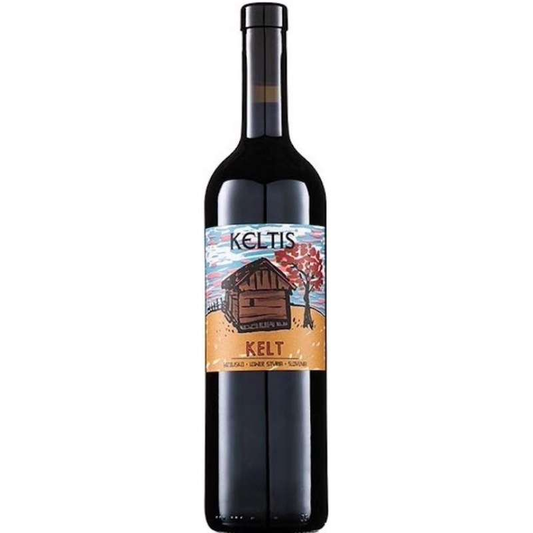
The irony is that this “movement against manipulation” has become a brand — complete with its own aesthetics. Cloudy wine in minimalist bottles, hand-drawn labels, poetic nonsense on the back: “fermented by moonlight,” “guided by intuition,” “whispered to by wild yeast.” It’s wine gentrified into lifestyle. If conventional wine can be too sterile, natural wine sometimes revels in its own filth.
Sulfur isn’t the villain it’s made out to be. It’s been used since Roman times, in tiny, controlled amounts, to protect wine from oxidation and spoilage. The greatest producers in Burgundy and Barolo use it judiciously — not to erase character, but to preserve it. It’s like seasoning in food: the right pinch brings harmony, too much kills it, but none at all can leave things unfinished, unstable, half-alive and half-dead.
Well, how much sulfur contents your wine? Can we compare it to dried fruit content, for example? And how much is too much? How much wine wine should you drink to overdose your sulfur consumption?
Answering these questions we'll see how overblown the sulfur panic really is. Let’s break it down like a sober chemist (with a full glass).
How much sulfur is actually in wine?
Sulfur dioxide (SO₂) is used in winemaking as a preservative — to protect against oxidation and spoilage. Its total amount in wine is tiny, but it depends on the style:
Typical dry red wine: 20 - 60 mg/L (that’s milligrams per liter)
Typical dry white wine: 50 - 100 mg/L
Sweet wines or late harvest wines: 100 - 350 mg/L (sugar binds sulfur, so they need more to stay stable)
For comparison, the legal maximums (in the EU and US) are:
150 mg/L for reds
200 mg/L for whites
Up to 400 mg/L for very sweet wines (like Sauternes or Tokaji)
Most quality wines fall well below those limits.
Now compare that to dried fruit:
Sulfur dioxide isn’t just in wine — it’s in countless everyday foods, especially those sold as “preserved” or “dehydrated.”
Typical contents:Dried apricots: up to 2,000 - 3,000 mg/kg
Raisins or prunes: around 500 - 1,000 mg/kg
Apple rings or banana chips: about 600 - 1,200 mg/kg
Let’s translate that:
A handful of dried apricots (say, 40 grams) can contain 80–120 mg of sulfur dioxide — roughly as much as two full bottles of white wine.So yes — your innocent trail mix delivers a far greater sulfur punch than your glass of Chardonnay.
How much is too much?
The World Health Organization (WHO) recommends a daily limit of about 0.7 mg of sulfur dioxide per kilogram of body weight.
So, if you weigh 70 kg (around 155 lbs), your daily limit would be about 49 mg SO₂. But keep in mind: Not all sulfur in wine is free (i.e., active). Most of it is bound and harmless.The body can detoxify small amounts easily — you’re producing sulfur compounds right now in your own metabolism.
To “overdose” on sulfur from wine, you’d have to drink somewhere around two to three cases of wine in one sitting — we’re talking 20–30 bottles — before even approaching the lower toxic threshold. By then, your liver and dignity would have retired long before the sulfur got involved.
So what’s the fuss?
Mostly marketing and misunderstanding. A few people have true sulfur sensitivity (asthmatics, for instance), but for the vast majority of drinkers, the amount of SO₂ in wine is negligible — a fraction of what you get from a handful of dried fruit.
The myth persists because “chemical-free” sounds holy, and “contains sulfites” sounds sinister. But that label — required by law — is just bureaucracy, not a warning.
If you can eat a dried apricot without collapsing, you can survive a glass of wine just fine.
Summary:
Wine: 20 - 100 mg/L SO₂
Dried fruit: 500 - 3,000 mg/kg SO₂
Legal limits for wine: 150 - 400 mg/L
You’d need to drink 20 - 30 bottles to even approach danger levelsIn other words: Sulfur isn’t your enemy. Marketing is.
The problem isn’t “natural wine” — it’s the fetish of naturalness, the idea that purity exists only in rejection of knowledge. A great natural wine is transparent and fearless; a bad one is an excuse wrapped in ideology. The real masters of this craft — producers like Radikon, Gravner, Dard & Ribo — understand the thin line between minimalism and negligence. They intervene just enough to keep the wine alive in the bottle, not decomposing in it.
Meanwhile, the zealots have turned spoilage into a moral statement. If it tastes strange, they say, it’s “challenging.” If it smells off, it’s “honest.” If it’s undrinkable, it’s “an acquired taste.” But no — sometimes it’s just bad wine.
Wine doesn’t become truer by rotting in the name of purity. It becomes truer when it expresses its vineyard, its season, and the hand that guided it — gently, intelligently, without ego.
Natural wine deserves respect. The ideology around it deserves a deep breath and maybe a glass of something filtered, just to remember what clarity feels like.